Combination Weigher Procurement: 5 Key Differences Between Manufacturers and Trading Companies
Combination weighers are core metering equipment on packaging lines in the food, consumer goods, and hardware industries. Procurement decisions directly impact production line efficiency and long-term maintenance costs. Suppliers generally fall into two categories: manufacturers with their own workshops and trading companies that do not engage in production. The gap between these two types of suppliers in terms of production capabilities, technical expertise, and after-sales support is far more critical for buyers than price differences alone.
Combination weighers are core metering equipment on packaging lines in the food, consumer goods, and hardware industries. Procurement decisions directly impact production line efficiency and long-term maintenance costs. Suppliers generally fall into two categories: manufacturers with their own workshops and trading companies that do not engage in production. The gap between these two types of suppliers in terms of production capabilities, technical expertise, and after-sales support is far more critical for buyers than price differences alone.
Production Workshop: Visible Manufacturing Capability
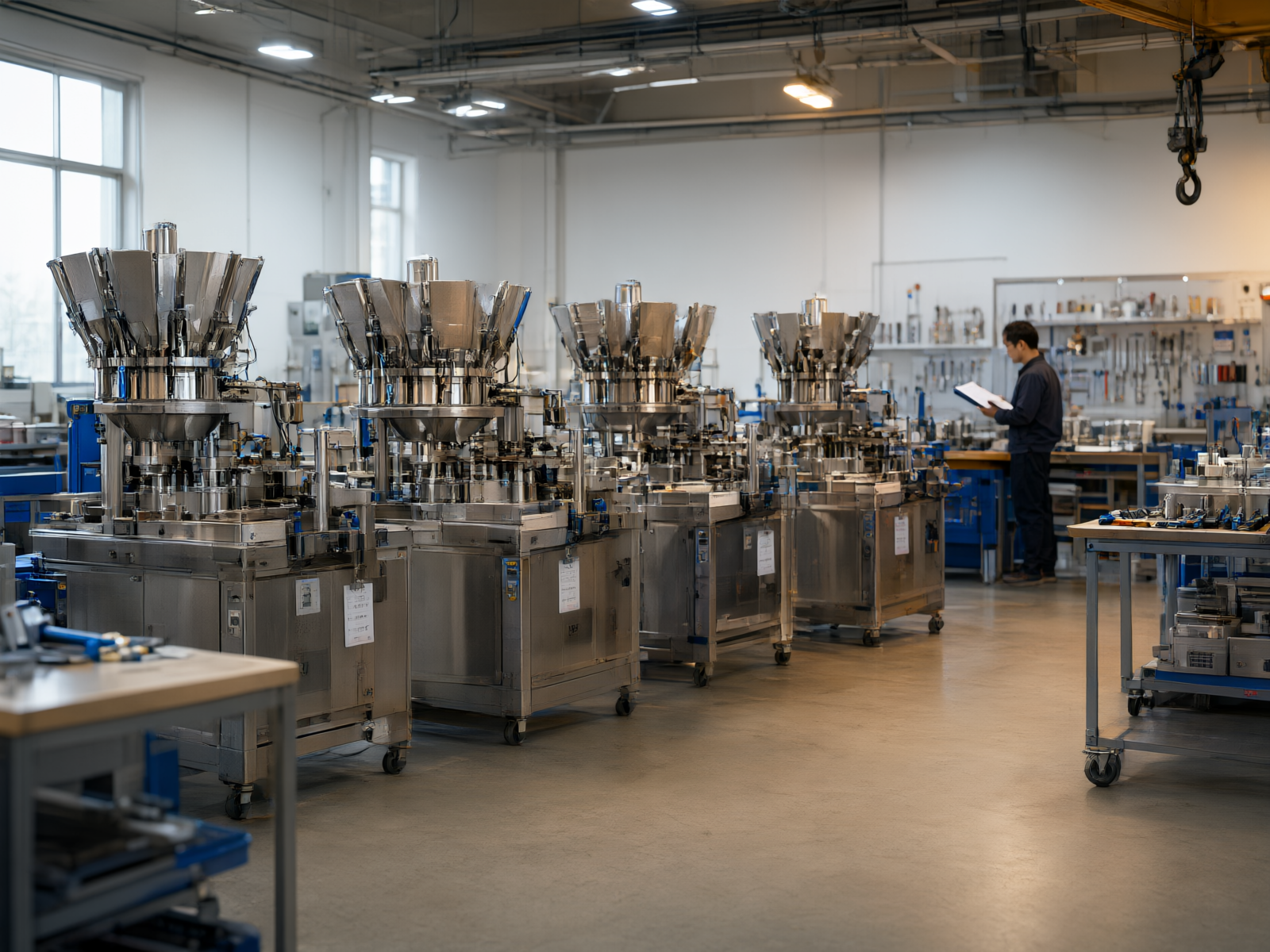
Our factory operates a standardized production line, handling everything from sheet metal cutting and welding to final assembly and testing—all within our facility. Buyers can visit anytime to verify our machining capabilities and capacity alignment. For instance, many of our clients send technical teams to inspect the production layout before signing contracts—a level of transparency that trading companies simply cannot offer.
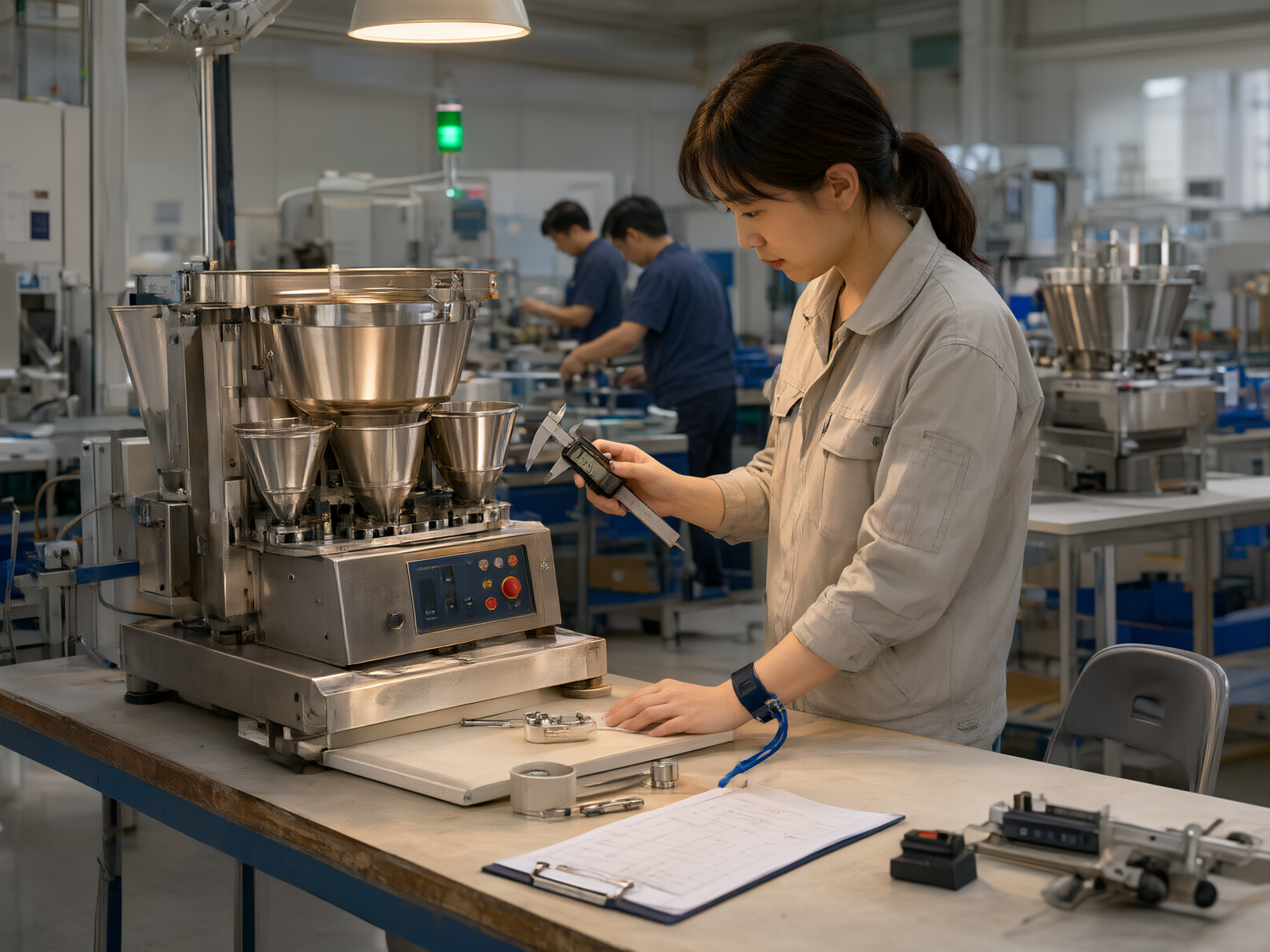
Trading companies lack in-house production lines and typically outsource orders to contract manufacturers. Before signing, buyers often see only samples or renderings, making it difficult to verify actual production capabilities. When a contract manufacturer's capacity is fully booked, delivery timelines become unpredictable.
In-house capabilities: determine whether the device can be adapted to your product.
The core competitiveness of multi-head weighers lies in the synergy between weighing algorithms and mechanical design. As an original manufacturer, we control key technologies such as vibratory feeder control algorithms and weigh bucket layout design, enabling us to adjust parameters based on material particle size, bulk density, and flowability. When customizing solutions for food clients, we recalibrate feeder amplitude and weighing windows according to material characteristics to ensure consistent weighing accuracy within ±0.5g.
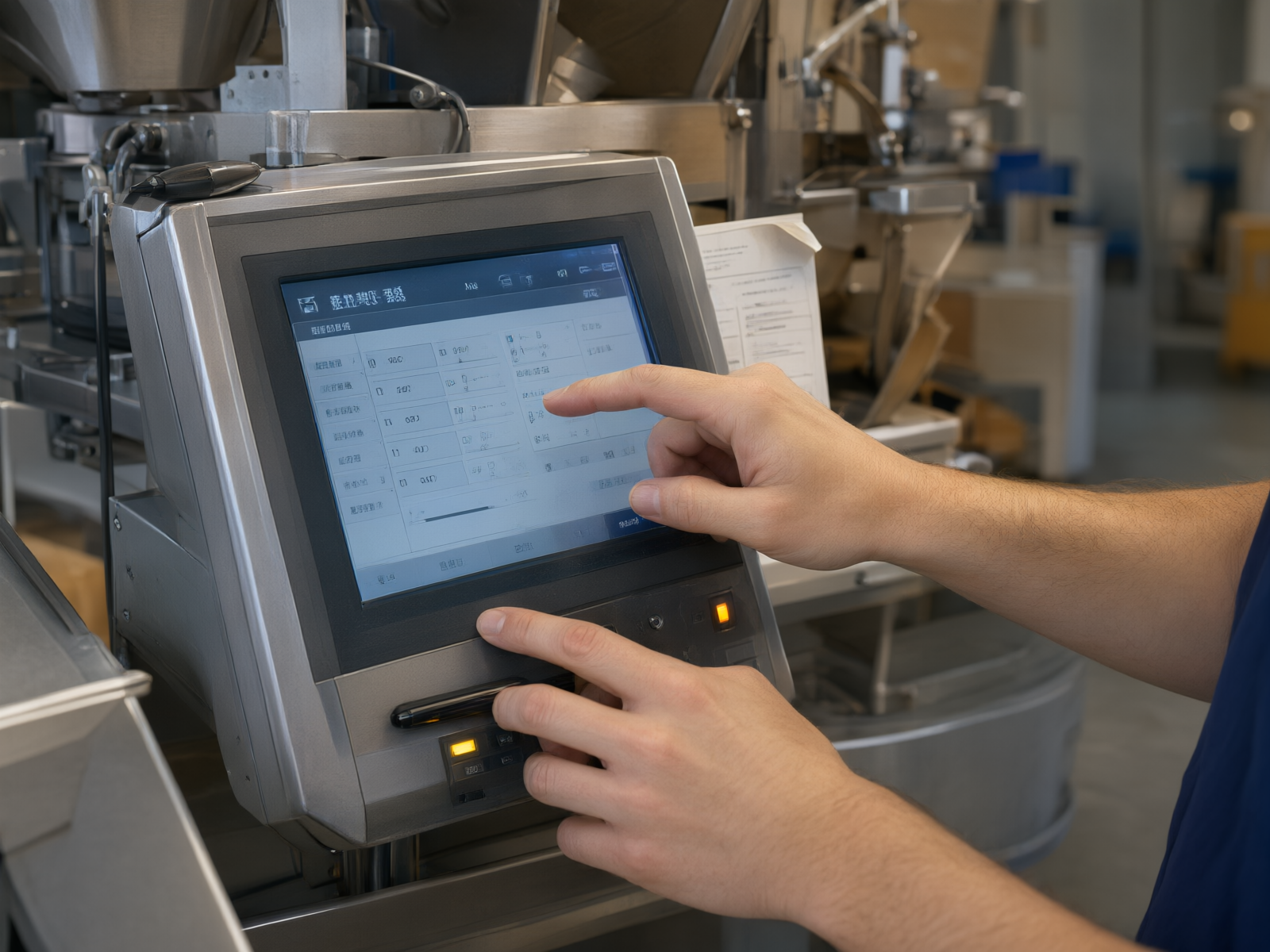
Trading companies typically lack in-house R&D teams. For custom requirements, they must forward specifications to OEMs, resulting in long communication chains and low response efficiency. When a buyer's material characteristics fall outside standard ranges, this model struggles to deliver effective technical solutions.
After-Sales Response: The Hidden Cost of Equipment Downtime
A single downtime event on a packaging line doesn't just halt one machine—it stops the entire production output. As an original manufacturer, we maintain our own dedicated after-sales technical team and a fully stocked parts inventory to ensure rapid response upon receiving service requests, offering either remote diagnostics or on-site repairs.
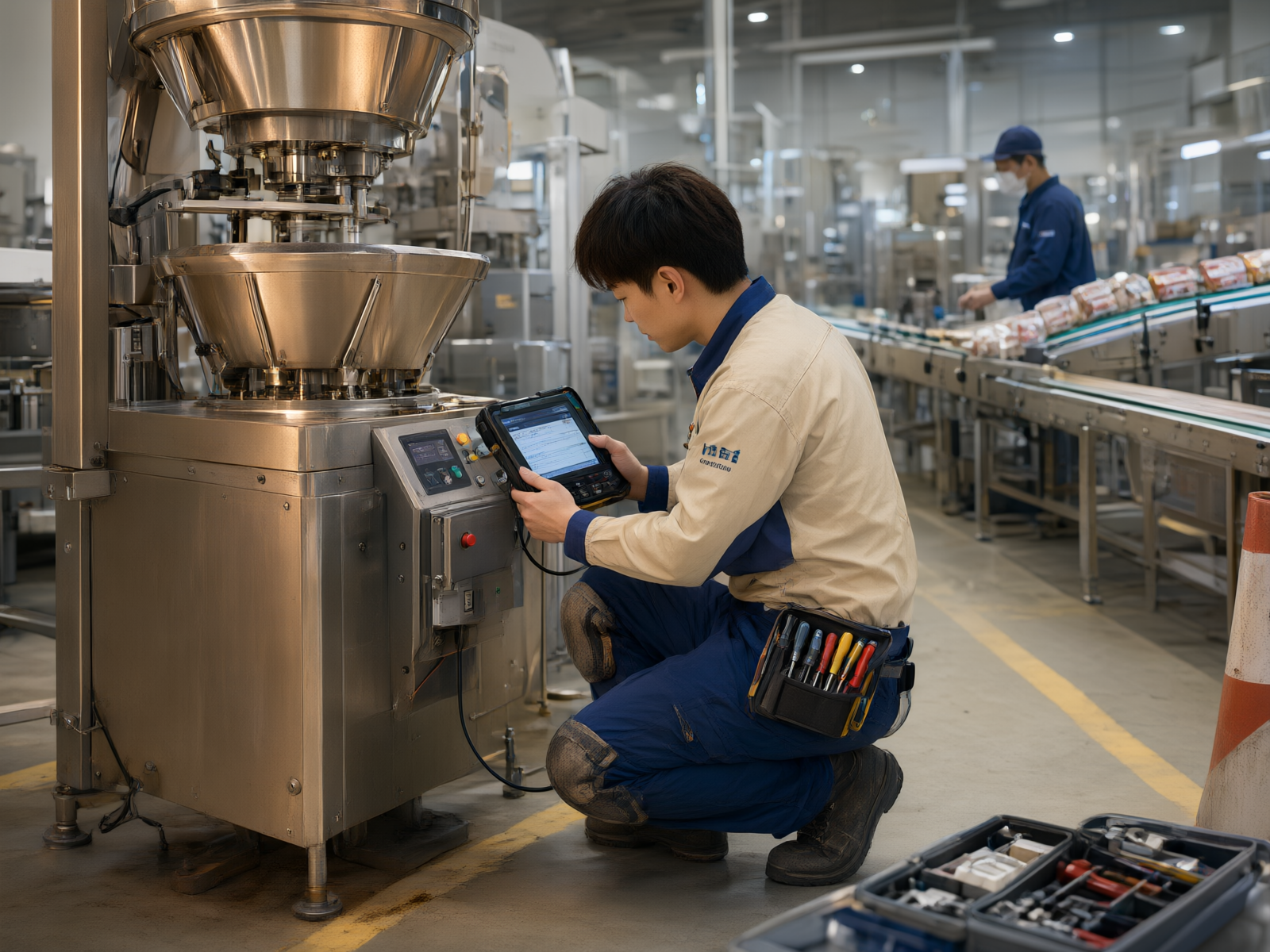
As a trading company, after-sales support requires coordination with OEMs for repairs, and spare parts allocation depends on upstream supply. Response times typically span days and can extend further during peak production seasons. Over the equipment's lifecycle, these hidden costs significantly increase total cost of ownership.
Price Transparency and Customization Flexibility
Factory-direct quotes are based on material costs, labor hours for processing, assembly and commissioning fees, and reasonable profit margins, allowing buyers to verify each item. Trade company quotes include the ex-factory price plus the intermediary markup; equipment with identical specifications typically costs 15%–30% more at the terminal level.
Customization flexibility: As the original manufacturer, we can adjust equipment dimensions, interface protocols, and loading/unloading methods to match your production line layout. Trading companies are limited by the standard product lines of their OEM partners, offering less room for configuration adjustments.
Quality Traceability & Long-Term Support
The manufacturer maintains a complete quality record for each unit, tracing everything from raw material batches to final inspection data. Key components such as sensors and control boards have clear sourcing and calibration records, enabling rapid identification and resolution of any quality issues.
Trading companies do not control the production process. Quality documentation is typically limited to factory inspection reports issued by the contract manufacturer, with no access to deeper process data. If a core component requires replacement, the buyer may be unable to verify the specifications or origin of the replacement part.
The difference between a manufacturer and a trading company lies in their manufacturing capabilities and service systems. While trading companies offer convenience in sourcing multi-category products, they have structural limitations in technical support depth, after-sales response speed, and quality control. For business owners who prioritize packaging line stability, choosing a supplier means selecting a partner for the next three to five years. The real factors in your procurement decision should be: Can you visit the factory? Can you speak directly with engineers? Can you get an immediate response when issues arise?
Photo Gallery
keywords
Reviews (0)
Post a comment
FAQ
FAQ
Yes, we offer professional on-site installation and commissioning services, along with free operator training to ensure the equipment runs smoothly.
Can't find a solution to your question?
Welcome to leave your questions. Our professional engineers will provide you with one-on-one support.