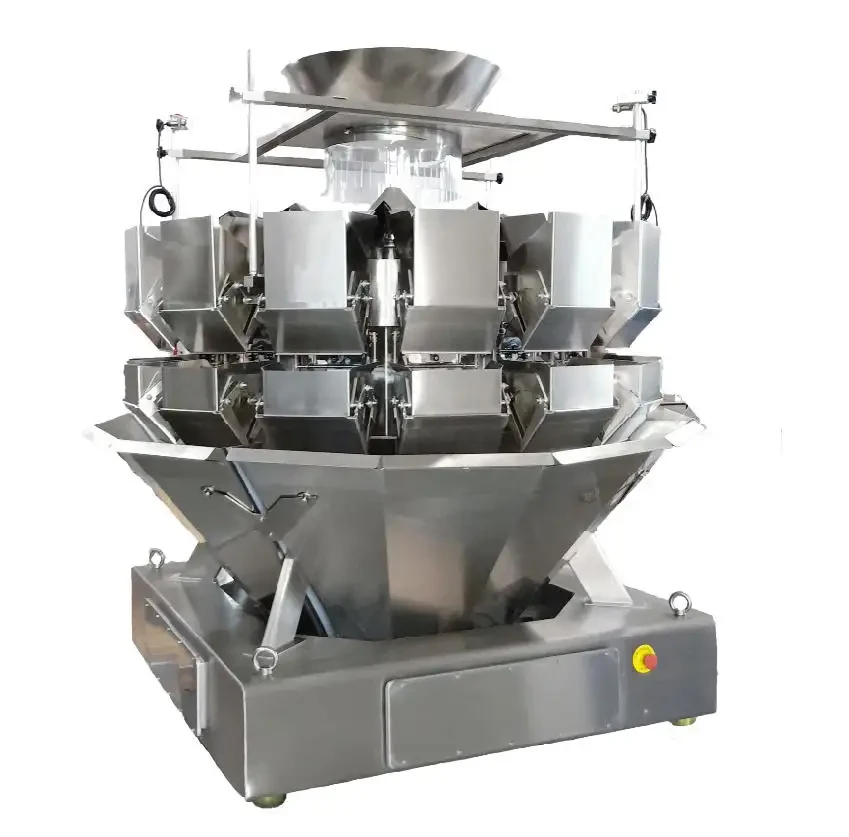
ZHD-AM14 Large 14-Hopper Combination Weigher: How to weigh high-target-weight materials
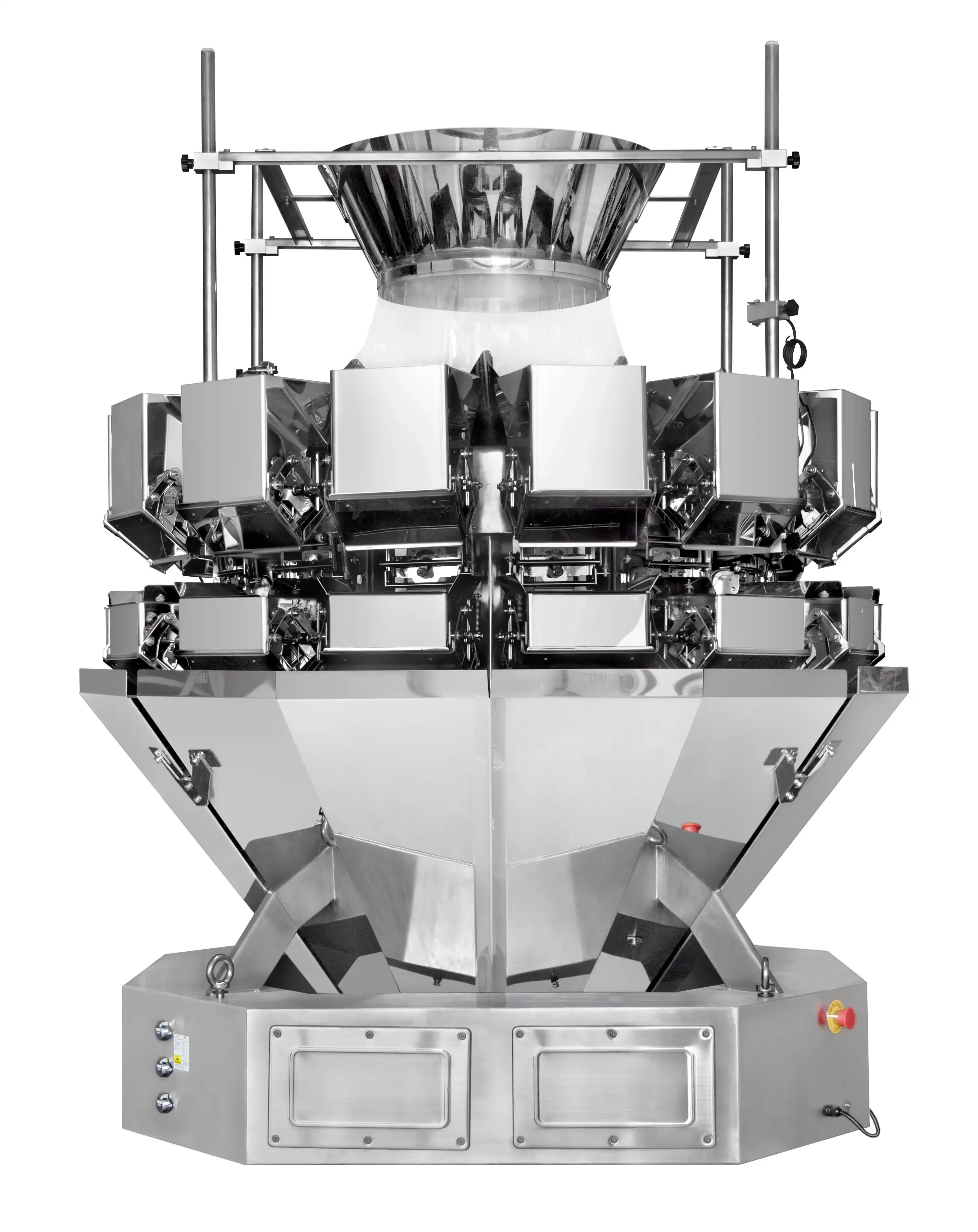
Expands the 14 bowl combination scale to handle large-volume, high-weight-fluctuation materials with high target weights per bag: a 5L oversized hopper reduces jamming and the number of bowls participating in combinations; the 14 bowl platform increases cycle frequency; stainless steel construction, IP65 protection rating, and ±0.5g nominal accuracy; supports over 100 recipes and multi-material blending.
Selecting a multihead weigher isn't about maximizing the number of buckets. On a single 14-bucket platform, bucket capacity determines how much each hopper can hold, while the number of buckets defines the range of combinations available to find the weight closest to your target. The ZHD-AM14 large-format 14-bucket weigher is designed specifically for materials that standard hoppers can't handle—items with large individual volumes, significant weight fluctuations per piece, and high target weights per bag. To understand this solution, we first need to explain why these materials are difficult to weigh.
Weighing challenges for heavy, large-volume items
A combination weigher selects the best weight combination from multiple hoppers to match the target weight. Smaller hoppers hold less material, requiring more hoppers to reach larger targets. This reduces the number of possible combinations and slows down the weighing cycle.
A common industry practice is to increase hopper capacity. For example, with larger 14 hoppers of the same type, capacity increases from 1.6L/2.5L in standard models to the 5L range. This allows each hopper to hold more material, reducing the number of hoppers needed for a target weight and providing a wider margin for combination. For fluffy or large single-item products such as spinach, fruit salads, large-shell nuts, coarse agricultural goods, and frozen foods, increasing hopper size helps prevent jams during feeding and creates buffer space during combination.
The 14 hopper operates on a separate line. Compared to the 10 hopper, the 14 hopper delivers higher cycle frequencies under the same accuracy requirements and is better suited for applications with significant weight fluctuations per unit or multi-product blending by ratio. Combining both capabilities defines the operational scope of the large-capacity 14 hopper combination weigher.
ZHD-AM14: Four Suitable Application Scenarios
The first category is single-bag packaging for heavy target weights. When the target weight per bag is high and the standard hopper cannot hold enough material in one cycle, increasing the hopper size reduces refill frequency and ensures more stable cycle times.
The second category includes materials with high weight variability, such as large-shell nuts, chunky fruits and vegetables, and irregular agricultural products. Single-item weights vary significantly. The 14 hopper's multi-combination capability selects target-matching combinations from a larger pool, reducing per-bag deviation.
The third category involves blending multiple materials by ratio. For hardware kits, mixed nuts, and snack assortments, each material must be dosed according to a specific formula into the same bag. The 14 hopper platform supports multi-channel synchronous weighing and seamless recipe switching—simply load the corresponding recipe during changeover.
The fourth category consists of production lines with high downstream packaging line speed requirements. The weighing stage requires a buffer time; with multiple hoppers and fast combinatorial operations, weighing is less likely to become the bottleneck for the entire line.
Please note that large 14 hoppers are not suitable for all materials. For low-weight, high-precision granular materials, standard hopper combinations offer better accuracy and cost efficiency. Selection should be based on material characteristics and target weight, rather than simply pursuing larger hoppers or higher hopper counts.
Stability backed by hardware specifications
ZHD-AM14Built on the Zhonghengda 14 hopper weighing platform. The chassis is constructed from 304 stainless steel, with all product-contact surfaces meeting food industry hygiene standards. The entire unit achieves an IP65 protection rating, making it suitable for washdown and dusty environments. The control system features intelligent sensors and an industrial-grade touchscreen, delivering a nominal accuracy of ±0.5g. During operation, vibration amplitudes for each feed line can be adjusted independently to ensure uniform feeding across different materials. The device supports storage of more than 100 formula parameters, allowing direct recall during multi-spec production to minimize changeover time. These represent the platform's inherent capabilities; however, whether a specific material achieves the stated accuracy ultimately depends on its properties, feeder stability, and site conditions.
End-to-end journey: from selection to acceptance
Maximize the value of a large 14 multihead weigher by tailoring the process to your specific production line. This starts with a needs assessment: provide material samples and their physical properties, target weight per bag with allowable tolerance, desired throughput and cycle time, bag specifications, existing line interfaces, as well as workshop space, utilities, and compressed air requirements.
Converting survey data into a proposal hinges on clearly defining the scope: hopper specifications, feeding method, material grade, interfaces with upstream/downstream equipment, acceptance criteria, and responsibility allocation between the equipment provider and the client site. As an original manufacturer, Zhonghengda handles everything from design to manufacturing in-house. Once boundaries are defined, delivery responsibilities become clear.
Factory Acceptance Testing (FAT) is conducted prior to shipment, using customer-supplied materials to validate cycle time and precision within the factory. After on-site installation and commissioning, Site Acceptance Testing (SAT) verifies production capacity, precision, and handover with upstream and downstream processes under actual workshop conditions.
Steps requiring customer cooperation
A machine's actual performance depends equally on manufacturing and customer collaboration. Material quality is the first link: customers must provide sufficient, representative samples with batch variation details. Larger deviations between samples and production materials increase project risk. Targets must be realistic; single-bag weight and tolerances should align with actual needs. During acceptance, evaluate based on "single-bag deviation distribution at target weight," not just nameplate accuracy. On-site data must be accurate: confirm site dimensions, utility conditions (power, water, air), and maintenance access in advance. Acceptance criteria must be actionable: clearly define evaluation standards, participating personnel, and trial run schedules beforehand.
For buyers, determining whether a large 14 bowl combination scale is suitable depends not on how high the numbers look on the spec sheet, but on its ability to consistently meet tolerance limits with real materials at actual operating speeds. The promotion strategy for ZHD-AM14 is built around this core principle.
Photo Gallery