Powder vs. Granule Packaging Machines: Differences in Dustproof Sealing and Material Configurations
Differences between powder and granule packaging machines lie in metering methods, dust-proof sealing, material specifications, and bag type compatibility. This article uses a comparison table and boundary conditions to clarify which materials each machine suits, plus five prerequisite checks for selecting chemical powder equipment.
Powder Filling Unit |
Screw metering structure |
When selecting packaging equipment, chemical powder customers often group powders and granules together, only to discover upon installation that dust suppression fails, seals trap material, and discharge remains unstable. Powder packers use screw dosing as their core, making them ideal for low-flowability, high-dust materials. Granule packers rely on multihead weighers, suiting uniform-sized, free-flowing granules. Key differences lie in dosing mechanisms, dust-proof sealing, material specifications, and bag type compatibility.
Measurement method determines sealing challenges
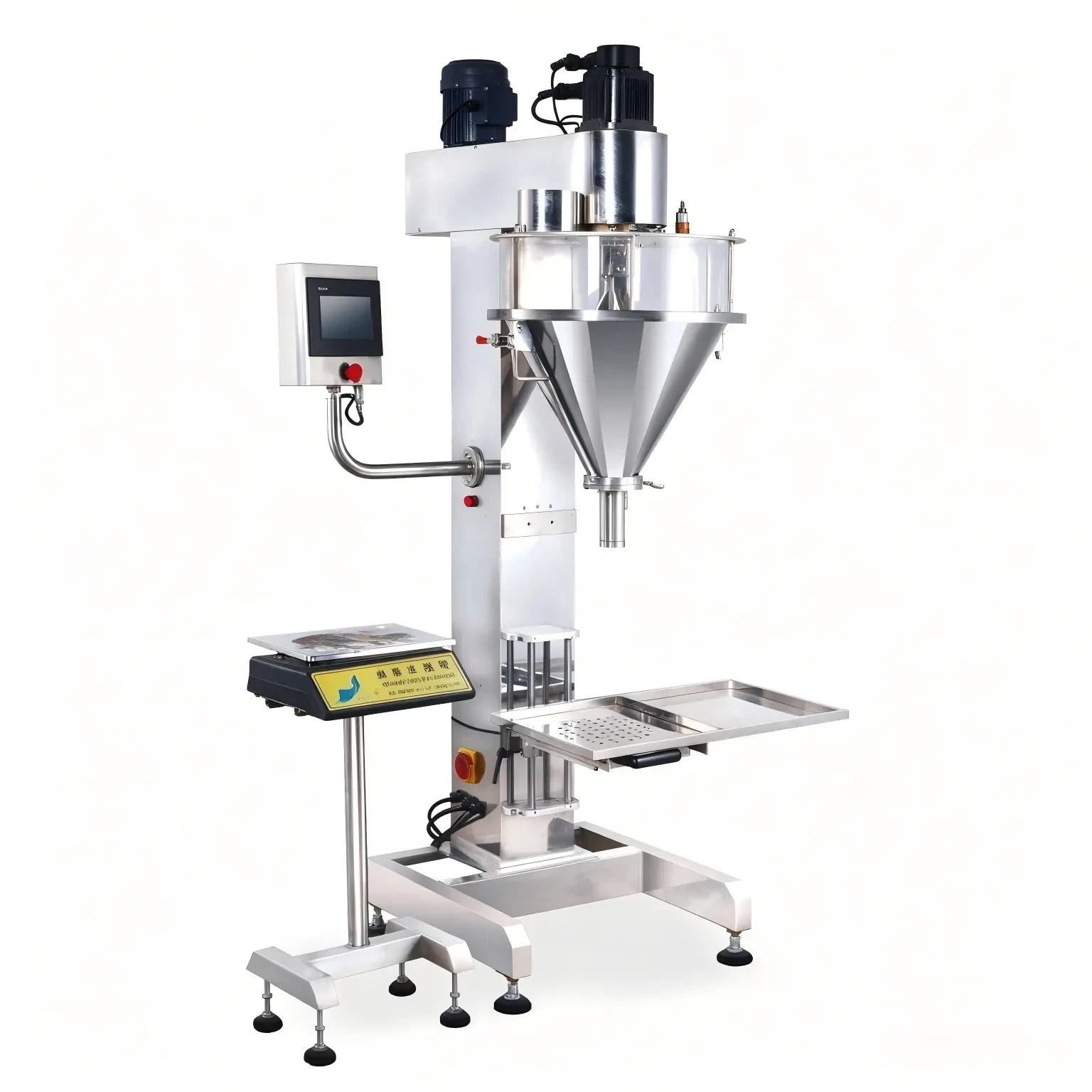
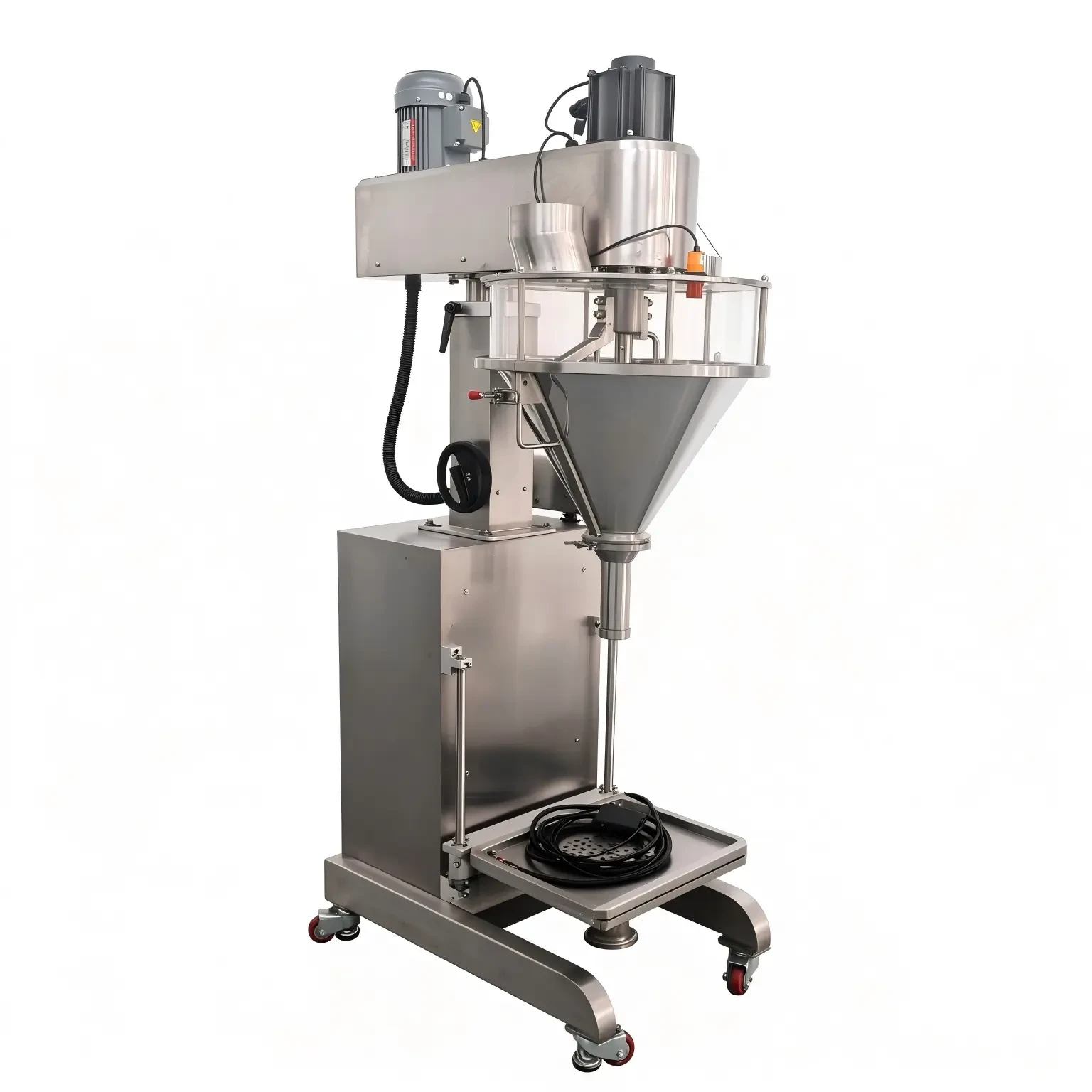
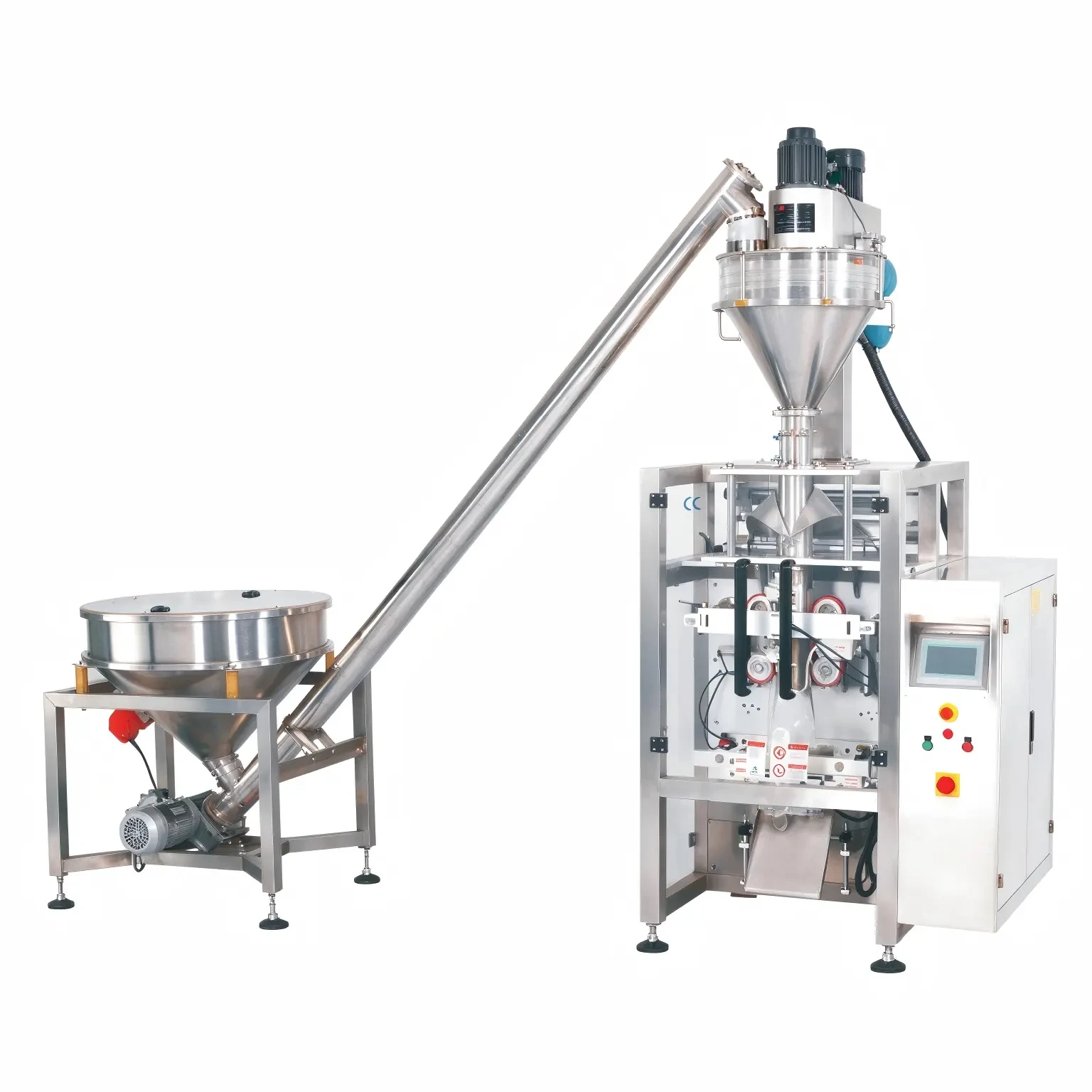
Powder packaging machines generally use screw metering. OurZHD-T04 Powder Quantitative Packaging SystemComposed of a spiral vibratory feeder, screw metering machine, vertical packaging host, and finished product conveyor. Packaging weight ranges from 5g to 25000g, with metering accuracy of ±1% to ±0.5% (depending on material) and filling speed of 5 to 30 bags per minute. The system uses volumetric screw feeding to handle powders prone to bridging or arching, though dust may be generated at both the feed inlet and bag discharge outlet.
The granule packaging machine follows a different route. The multi-head weigher divides the material into portions; the weighing hoppers combine to reach the target weight as closely as possible before discharging. Granules fall by gravity. With good flowability and uniform particle size, this method offers fast weighing speeds and low breakage risk. However, since the weighing hoppers are open with a significant drop height, even granules with high dust content can carry dust into the workshop.
Dust-proof sealing: sealed transfer and clean closure
The sealing objective for the powder machine is to prevent powder leakage. The feeding section uses a sealed screw conveyor with a covered hopper, maintaining a precise clearance between the screw and the tube while isolating the bearing from the material chamber. The discharge outlet fits tightly against the bag opening, remaining tensioned during filling. For ultrafine or lightweight powders, a dust removal system or negative pressure collection interface is required; otherwise, trapped powder at the seal will cause immediate air leaks. The ZHD-T04 can be equipped with an arch-breaking mechanism and a dust collector to address bridging and dusting conditions respectively.
The sealing goal for pellet machines is to prevent material jams. The Z-type bucket elevator operates in a fully enclosed manner, minimizing dust generation during the lift phase. Dust covers are installed on the weighing hoppers, and discharge chutes are designed to control drop height. The most critical area is the bag sealing zone; falling pellets can cause false seals if they get caught in the seal line. Residue must be cleared using air blowers, brushes, or vibration devices. For high-fines content or heavy packaging weights, the pellet lines should also follow powder handling practices with additional dust collection.
Material Configuration: 304 is the starting point; corrosion and explosion-proofing determine upgrades.
Both equipment types use 304 stainless steel as the standard material for product-contact parts. When handling chemical powders containing acids, alkalis, salts, or halogens, 304 may lack sufficient corrosion allowance; in such cases, contact components should be upgraded to 316L, seals replaced with PTFE or FKM, welds made continuous and polished, and dead zones minimized. Powders tend to adhere to rough surfaces, so wall roughness and quick-release structures significantly affect cleanability. For pelletizers, consider wear: hoppers, chutes, and weigh hoppers endure long-term abrasion and may require localized wear-resistant liners.
When combustible dust reaches explosive concentrations, motors, electrical controls, and static electricity can all become ignition sources. Explosion-proof motors, static grounding, and electrical configurations compliant with area classification are required. Zhonghengda offers configurable dustproof and explosion-proof structures for chemical industry applications; specific ratings must be confirmed based on dust characteristics and workshop zoning.
One table to clarify selection boundaries
Comparison Criteria | Powder Packaging Machine | Granule Packaging Machine |
|---|---|---|
Core Metrics | Single-screw or twin-screw volumetric metering | Multi-head weigher |
Applicable Materials | Fine particle size, low bulk density, prone to dust generation and bridging | Uniform particle size, excellent flowability; available in block, strip, or irregular shapes |
Dust Sources | Loading, screw feeding, bagging | Discharge of weighing hopper, drop height, and bag mouth residue |
Dust Prevention Focus | Sealed screw feeder, negative-pressure dust collection, bag-mouth sealing | Enclosed upgrade, weigh hopper dust cover, sealing air blow cleaning |
Material Configuration | Starting at 304, corrosion condition assessment 316L | Starts at 304; add wear-resistant liners to worn areas. |
Typical bag type | Three-side seal, Four-side seal, Back seal | Pre-made bags, including zipper bags and stand-up pouches |
FAQ | Bridging, adhesion, and powder sealing | Seal clogging, breakage, and fine powder leakage |
There are also gray areas. High-dust powders fed directly into multihead weighers can cause dust to spill from the weighing hoppers, requiring either dust extraction or a powder-specific solution. Lightweight ultrafine powders tend to slip on single-screw feeders; dual-screw systems with arch-breaking mechanisms offer more stability. If your facility packs both 500g small bags and 25kg large bags, you typically need two separate metering units.
FAQ
Can powder packaging machines handle granules?Better granule flowability and uniform particle size improve the efficiency and accuracy of multihead weighers. For low output with relaxed precision requirements, screw feeders can be used, but breakage rate and speed loss must be evaluated.
Can the granule packaging machine handle powders?Generally not recommended. Powders can spill from the open weighing hopper and adhere to its inner walls, causing weight drift and increasing dust removal costs.
What should you confirm first when selecting chemical powders?Particle size, bulk density, flowability, corrosivity, and dust explosion class are the five prerequisites that determine dosing method, material grade, and explosion-proof configuration; production capacity and budget come next.
ZHD-T04 Powder Quantitative Packaging System |
Discharge port sealing details |
Prioritize material characteristics; equipment type is the outcome. For powders, key challenges are dust control and material resistance. For granules, they are dosing speed and sealing cleanliness.
Photo Gallery