The Weighing Dilemma in Hardware Packaging: Why Manual Errors Are Hard to Control and How Linear Scales Boost Production Yield

The packaging stage in the hardware accessories industry has long faced a contradiction: low unit prices and high volumes, yet strict weight accuracy requirements. Systematic errors from manual weighing lead to overage waste and underweight complaints. Linear scales deliver ±0.5g precision at speeds of 30-60 packs per minute, helping factories boost pass rates from 95% to over 99%.
The hardware accessories industry faces a longstanding challenge: low unit price and high volume, yet uncompromising requirements for weight precision. A single screw may deviate by just a few grams, but when thousands are packed together, cumulative errors directly impact product yield rates and customer trust. Many factories still rely on manual weighing, assuming equipment investment is costly with a long payback period. This approach works for small orders, but once production scales up, the problems become undeniable.
Sources of Error in Manual Weighing
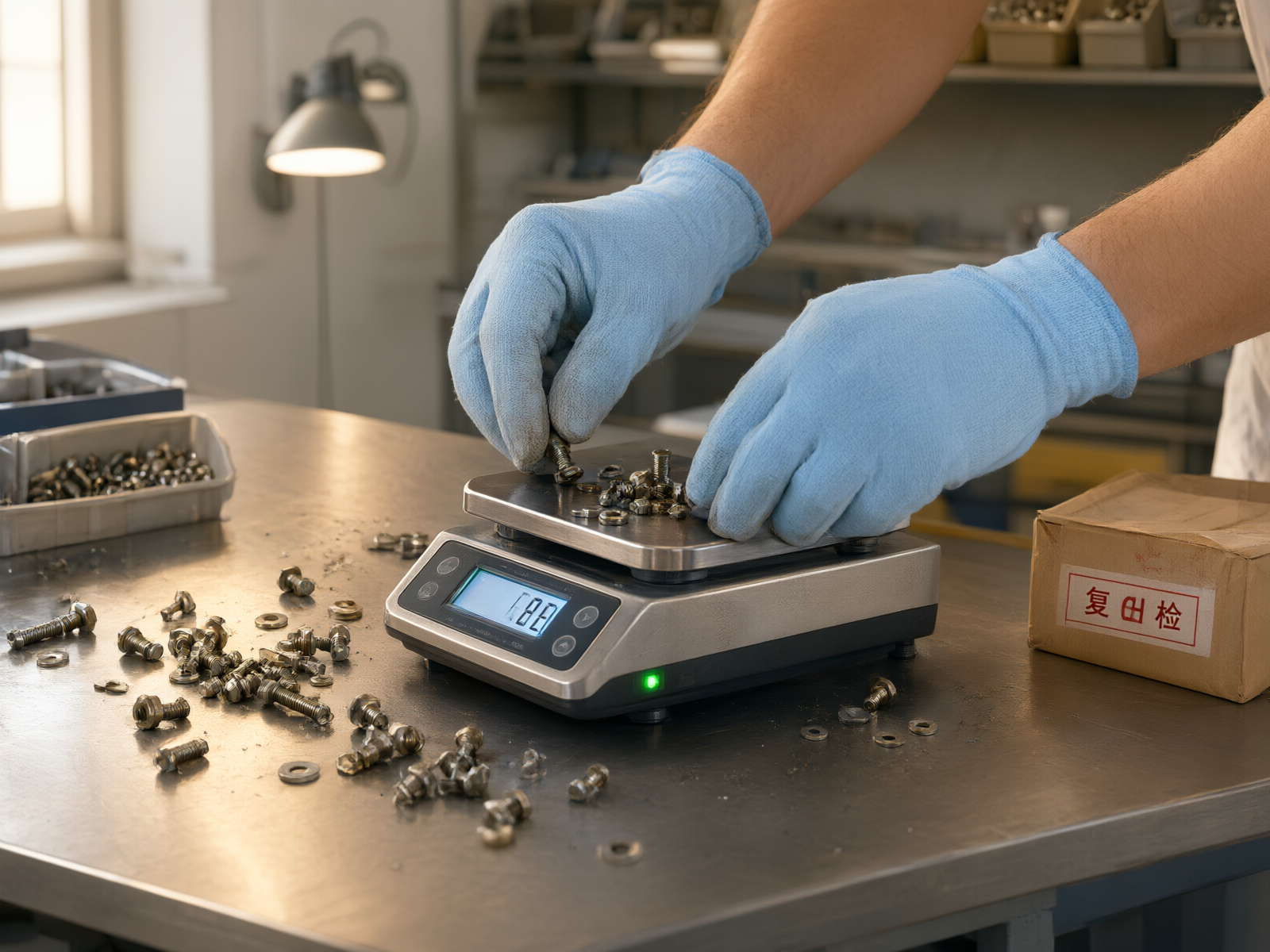
Manual weighing errors are not random; they are systemic. Fluctuations in operator attention, accumulated fatigue, and differences in movement habits all cause weighing results to deviate from target values. Even with high-precision electronic scales, the actual accuracy of manual operation falls far short of the device's rated precision. After two hours of continuous work, a skilled worker's error rate typically rises from an initial ±1% to ±3% or higher. This means that for every 100 packages, 3 may exceed the allowable tolerance range.
Weight distribution in hardware components also varies. For screws of the same specification, single-unit weight can fluctuate within ±0.2g due to differences in material density, surface treatment processes, and production batches. During manual weighing, operators must frequently adjust the target value to compensate for these fluctuations. However, human reaction speed and calculation ability are limited, causing adjustments to lag behind actual changes. As a result, the actual weight in packaging bags varies: excess weight increases raw material costs, while insufficient weight triggers customer complaints.
Hidden Costs: Rework, Waste, and Customer Churn
The high error rate of manual weighing causes more than just losses in a single production run. Overfilled packages mean giving away extra grams per unit; at a daily output of 10k units, monthly raw material waste can reach tens of thousands of yuan. Underfilled packages are even worse—if customers notice the shortage, entire shipments may be returned or require reshipment, driving up logistics costs and damaging brand reputation far beyond the value of the raw materials.
Rework is another hidden cost. Products failing weight inspection must be unpacked and reweighed, further reducing manual efficiency. To minimize error rates, some factories are forced to add more QC staff, creating a "weighing–inspection–rework" cycle. This model works when order volumes are stable, but during peak seasons with tight capacity, the bottleneck effect becomes immediately apparent.
Customer churn carries long-term costs. Hardware component buyers are typically downstream manufacturers or distributors who have strict requirements for supplier delivery quality. If weight deviations occur across several consecutive batches, buyers will switch to other suppliers. In the hardware industry, switching suppliers is low-cost due to the abundance of available options and minimal price differences; thus, quality stability becomes the decisive factor.
How Linear Scales Work and Their Accuracy Advantages
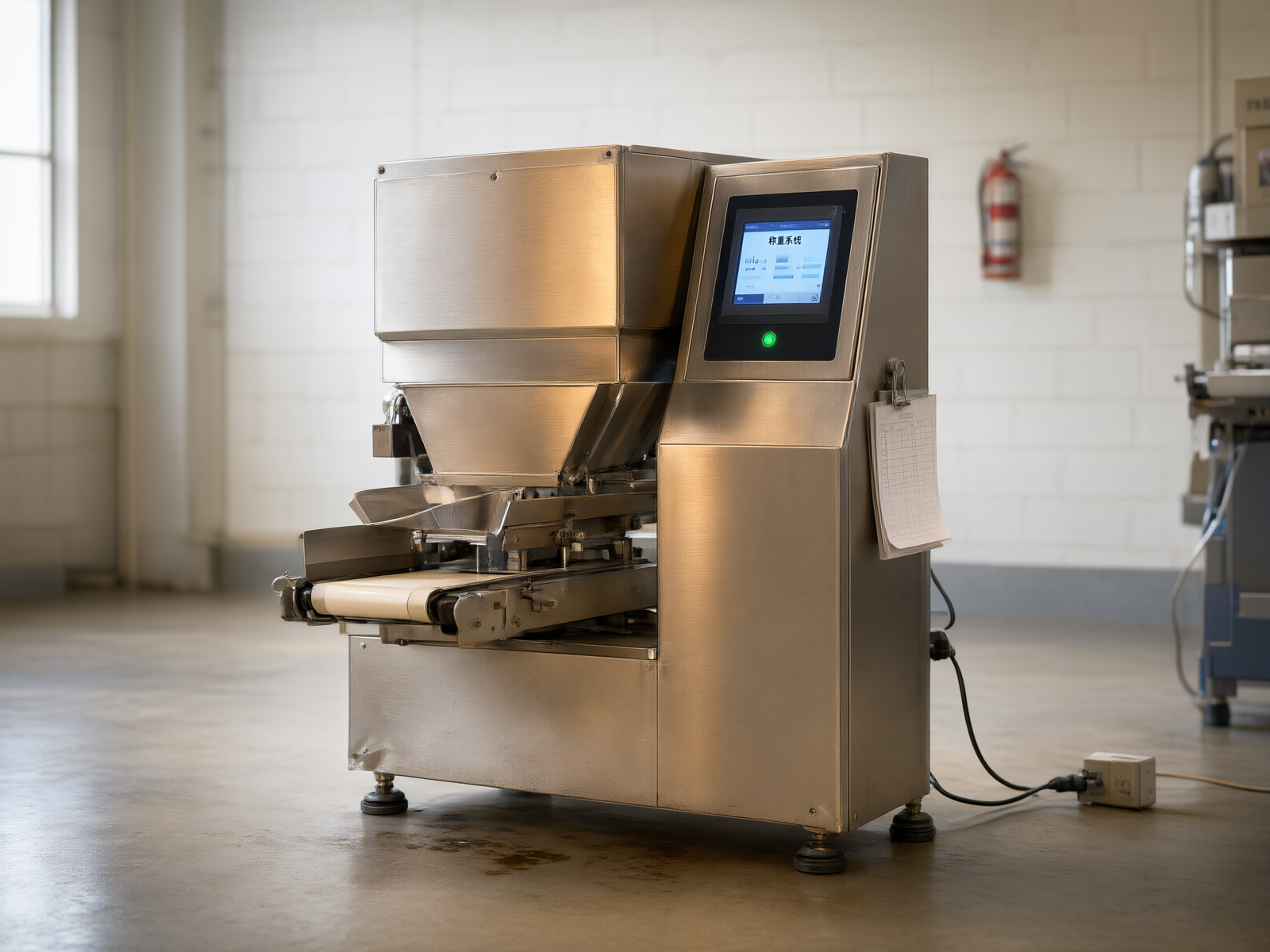
A linear weigher is an automated weighing device that combines vibratory feeding with high-precision sensors. Unlike multi-head combination weighers, which use a multi-bucket combinatorial logic, linear weighers employ single or multiple buckets in sequential order to weigh fixed increments, accumulating them to reach the target weight. This design is ideal for hardware components and other materials with uniform shapes and good flowability.
The core advantage of linear weighers lies in precision control. Taking the ZHD-X01 single-hopper linear weigher manufactured by Zhongshan Zhonghengda Intelligent Equipment as an example, its weighing accuracy reaches ±0.5g—far superior to the ±2-3% error rate typical of manual operations. The device is constructed from 304 food-grade stainless steel and features a high-precision smart sensing control system capable of performing dozens of weight samples and dynamic compensations per second. Even when individual product weights fluctuate, the system adjusts in real time to ensure each package's net weight remains stable within ±0.5g of the target value.
Another key advantage is speed. Linear weighers can handle 30–60 bags per minute, which is 3 to 5 times faster than manual weighing. Importantly, the equipment operates continuously without fatigue-related errors, ensuring stable cycle times and seamless synchronization with upstream production lines and downstream packaging machinery.
Actual improvement in production line yield
Introducing linear scales typically leads to significant improvements in yield rates for hardware accessory factories. Yield rate is defined as the proportion of qualified products relative to total output, with weight deviation being one of the primary causes of defects. When weighing accuracy improves from manual ±2-3% to equipment-based ±0.5g, the proportion of overweight and underweight packages drops significantly.
Based on a real-world case from a fastener manufacturer, manual weighing yielded a pass rate of approximately 95%, with monthly raw material waste due to over-weighing costing about 2 ten thousand yuan, and customer complaints from under-weighing ranging from 3 to 4 times per month. After implementing the linear scale, the pass rate rose above 99%, raw material waste was reduced by 80%, and customer complaints dropped to zero. The equipment payback period was less than one year.
Improved yield triggers a ripple effect. Inspection workload decreases, rework costs drop, and overall line efficiency rises. Some factories have reduced inspection staffing, reallocating human resources to higher-value roles. For buyers, consistent delivery quality strengthens partnership confidence and drives order growth.
Upgrade path from standalone units to full production lines
The value of linear weighers extends beyond weighing itself to their seamless integration with full-line automation systems. Modern hardware packaging lines typically involve multiple processes—vibration feeding, weighing, sealing, boxing, and palletizing—where cycle time synchronization is critical. Linear weighers can integrate seamlessly with vertical form-fill-seal machines, pouch filling systems, and conveyor lines to create fully automated packaging production lines.
Zhongshan Zhonghengda Intelligent Equipment offers more than standalone machines; we provide one-stop solutions from single units to complete production lines. Tailored for the hardware accessories industry, our equipment supports OEM/ODM customizations and can be flexibly configured based on material characteristics, packaging specifications, and capacity requirements. 304 stainless steel construction ensures durability in humid and dusty environments, while CE certification and ISO9001 compliance guarantee regulatory adherence for export customers.
For hardware component factories still relying on manual weighing, the urgency to upgrade stems from shifting competitive dynamics. While competitors leverage data for quality control and automation to replace labor, clinging to experience and intuition erodes your edge under dual pressures of cost and quality. The investment in linear scales is manageable; the key lies in quantifying the hidden costs of human error.
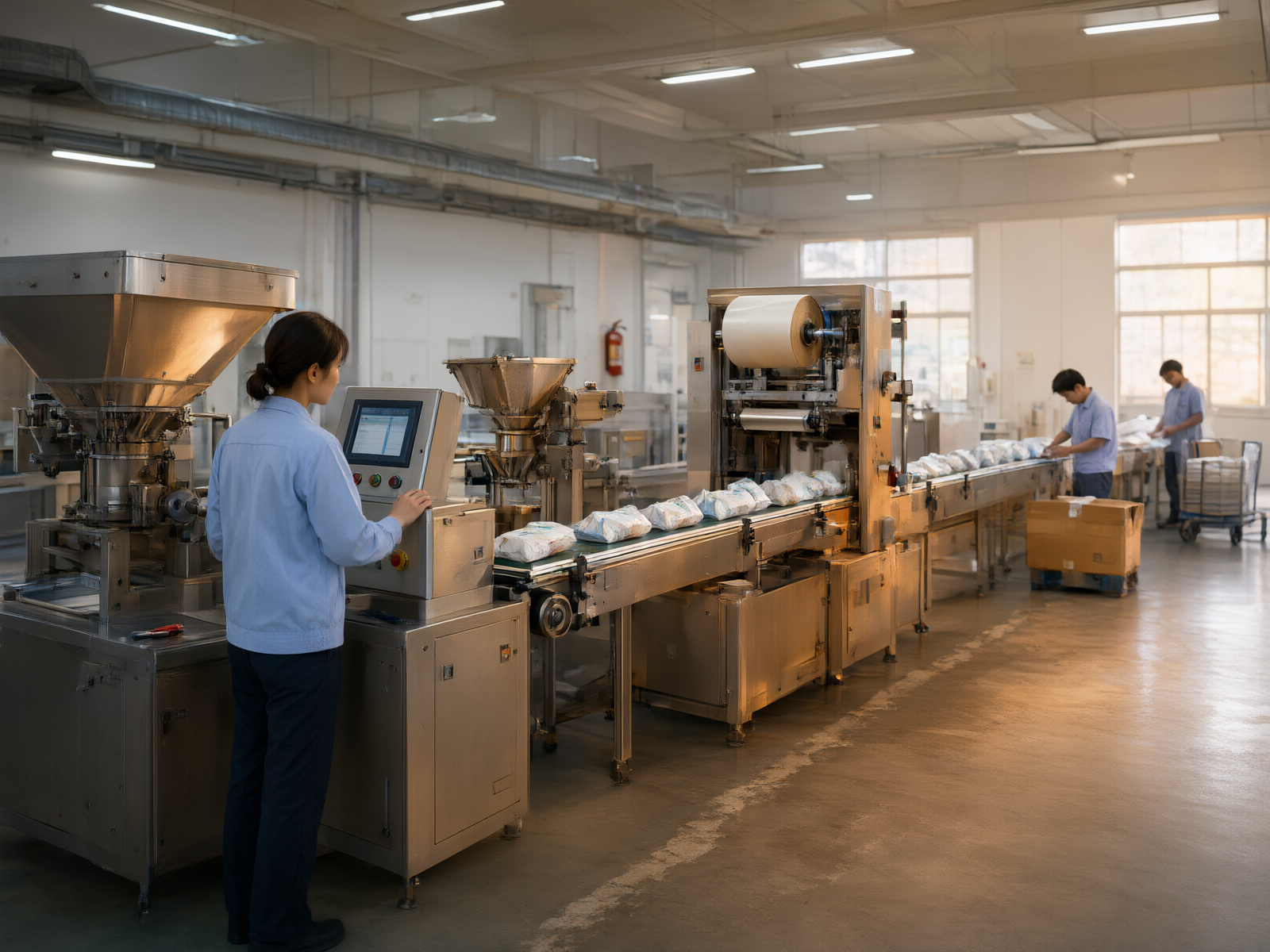
Photo Gallery
keywords
Reviews (0)
Post a comment
FAQ
FAQ
Yes, we offer professional on-site installation and commissioning services, along with free operator training to ensure the equipment runs smoothly.
Can't find a solution to your question?
Welcome to leave your questions. Our professional engineers will provide you with one-on-one support.