Hardware Combination Scale Selection Guide: 10-Head vs. 14-Head – How to Choose Accuracy and Quick Changeover
10 heads or 14 heads? This article compares the two types of multihead weighers—combinatorial space, speed, and adaptability—to clarify their ideal use cases. It explains the difference between nominal accuracy and actual accuracy, highlights key factors for evaluating changeover efficiency, and provides a practical four-step selection method along with on-site trial recommendations.
Selecting a multihead weigher for hardware products always raises a specific question: Should you choose the 10-head or 14-head model? The number of heads directly impacts maximum speed, material versatility, and both procurement and operational costs. This guide breaks down selection criteria into checkable dimensions to help hardware manufacturers make the right choice based on their materials and production cycle times.
What the number of heads determines: search space, speed, and receptive field
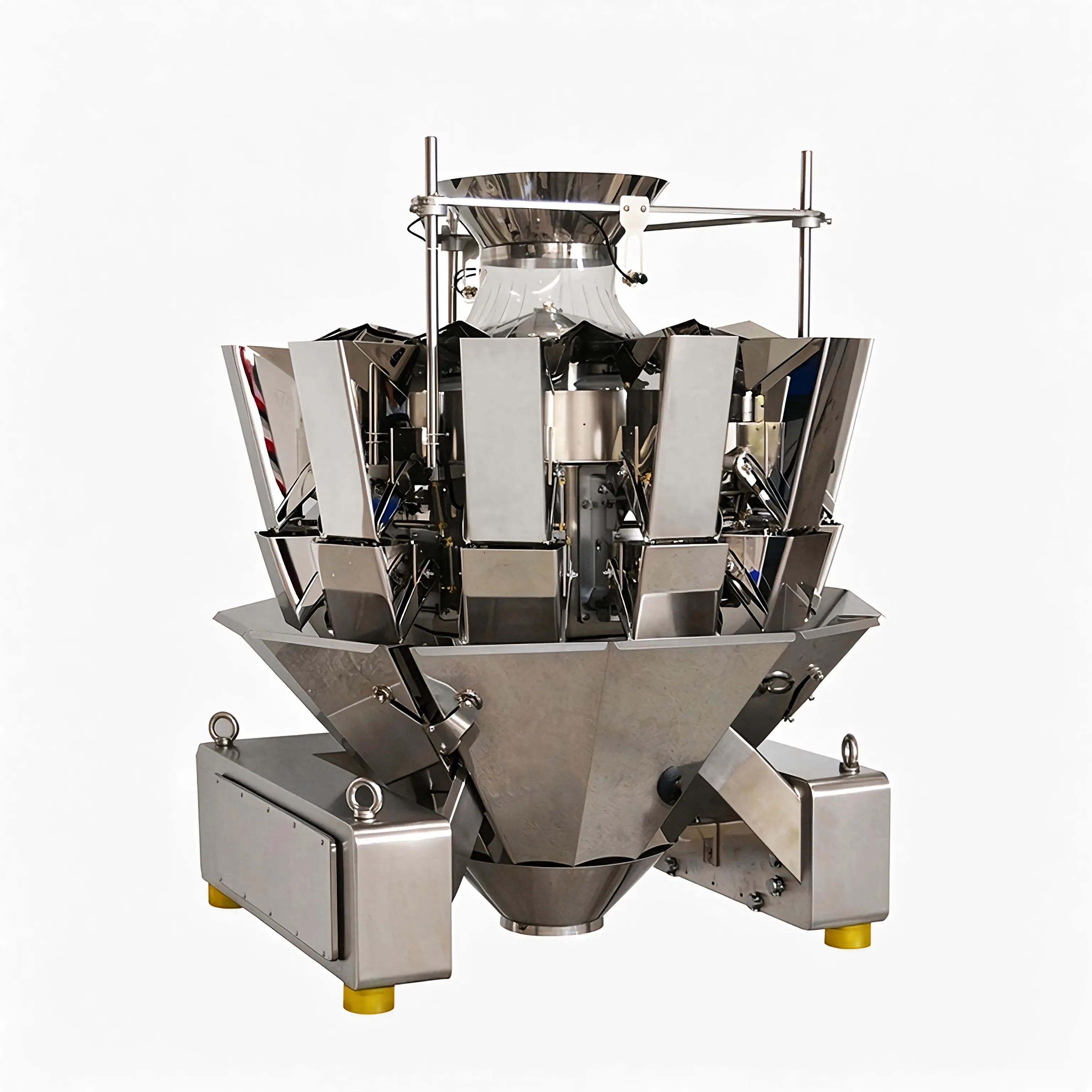
The combinatorial weigher operates by weighing multiple hoppers simultaneously. The control system then uses combination algorithms to select the group whose total weight most closely matches the target, and discharges that group. The greater the number of hoppers, the faster the number of possible combinations grows, increasing the likelihood of hitting the target weight and reducing deviation in each discharge cycle.
Increasing the number of heads delivers two direct benefits: speed and adaptability. Under identical accuracy requirements, more heads enable higher cycle frequencies. They also expand the system's capability to handle complex scenarios such as high target weights, significant single-unit weight fluctuations, and multi-component blending. Note that these gains are not linear; adding heads increases equipment footprint, pneumatic complexity, and cost. Therefore, selection should be optimized for the specific application rather than maximizing head count.
Which scenarios are suitable for the 10 head combination weigher?
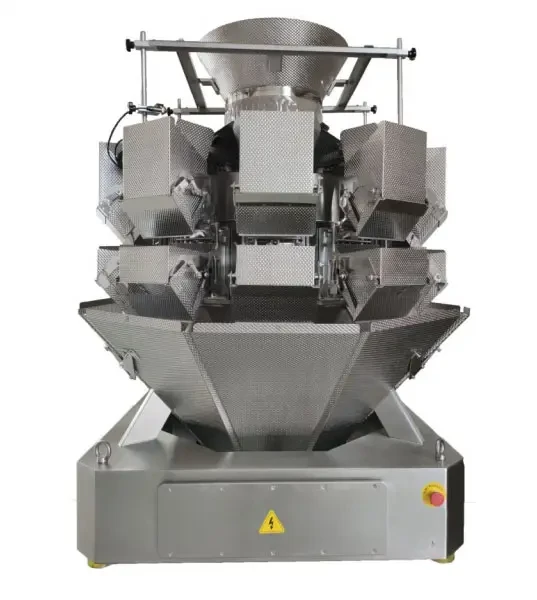
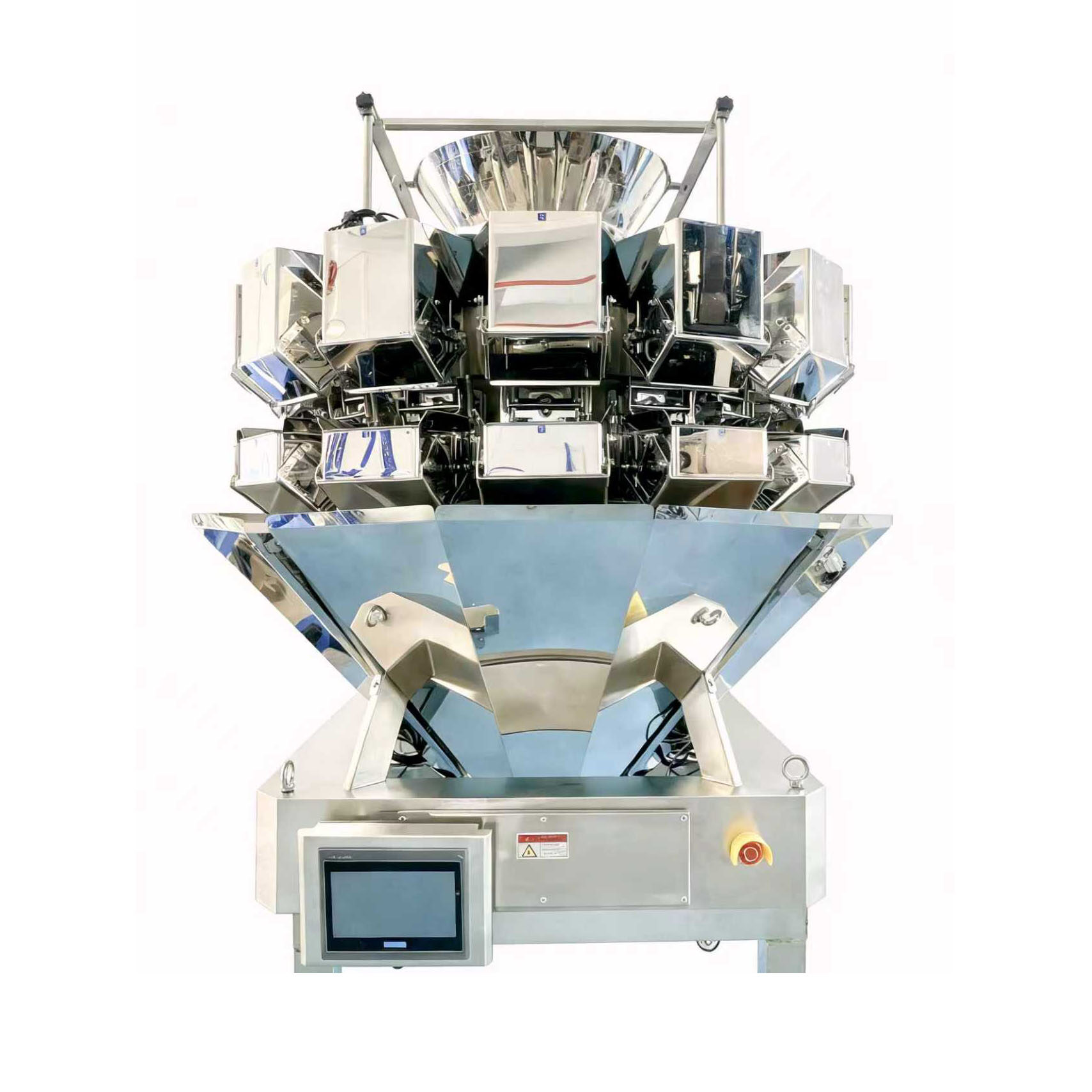
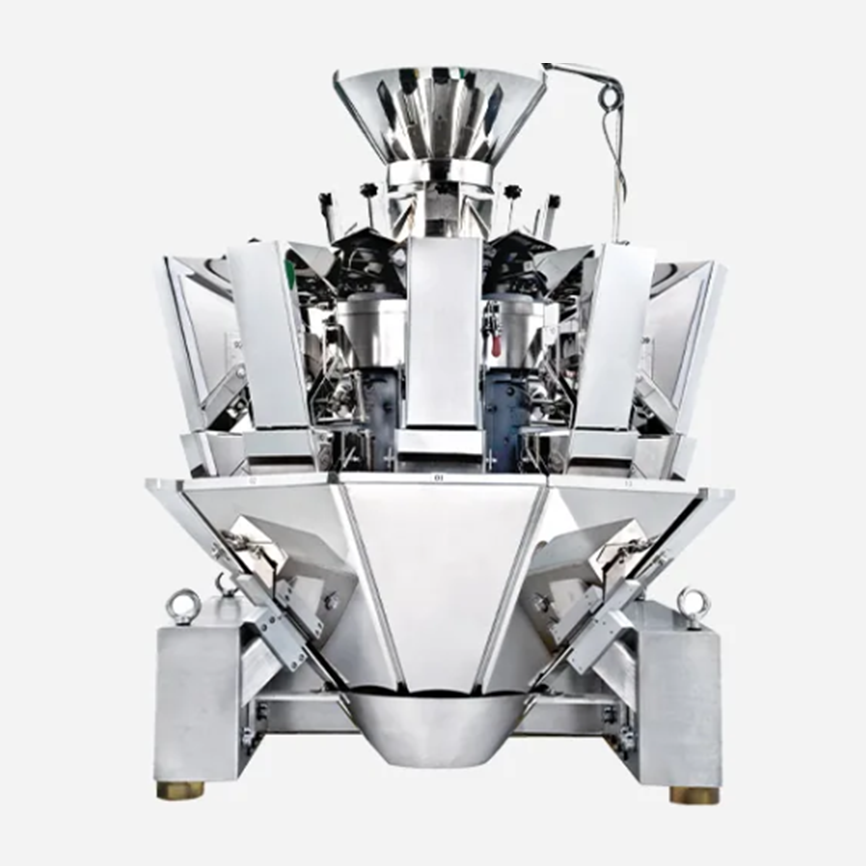
The 10-head combination weigher is the flagship model for small-packaging production lines with multi-specification switching. Powered by ZhonghengdaZHD-A10 10 Head Combination WeigherFor example, its weighing range is 100-5000g, with a maximum weighing speed of 65 P/M, hopper capacity of 1.6L/2.5L. It features a 304 stainless steel body, a 7-inch touchscreen, and stepper motor drive, with an IP65 protection rating. For hardware components such as screws, hinges, and connectors—where individual weights are relatively uniform and target weights are low—this configuration covers most standard packaging needs.
For hardware accessories with material characteristics such as irregular shapes, weight fluctuations, and static electricity generation, Zhonghengda has established a separateZHD-AW10 10 Head Multihead WeigherThe adjustable hopper structure, vibration parameters, and detection logic can be tailored to different materials, making it ideal for hardware production lines with diverse specifications and frequent changeovers. The moderate number of heads also results in a more compact footprint, reducing the pressure on retrofitting existing workshop layouts.
Which scenarios are suitable for the 14 head combination weigher?
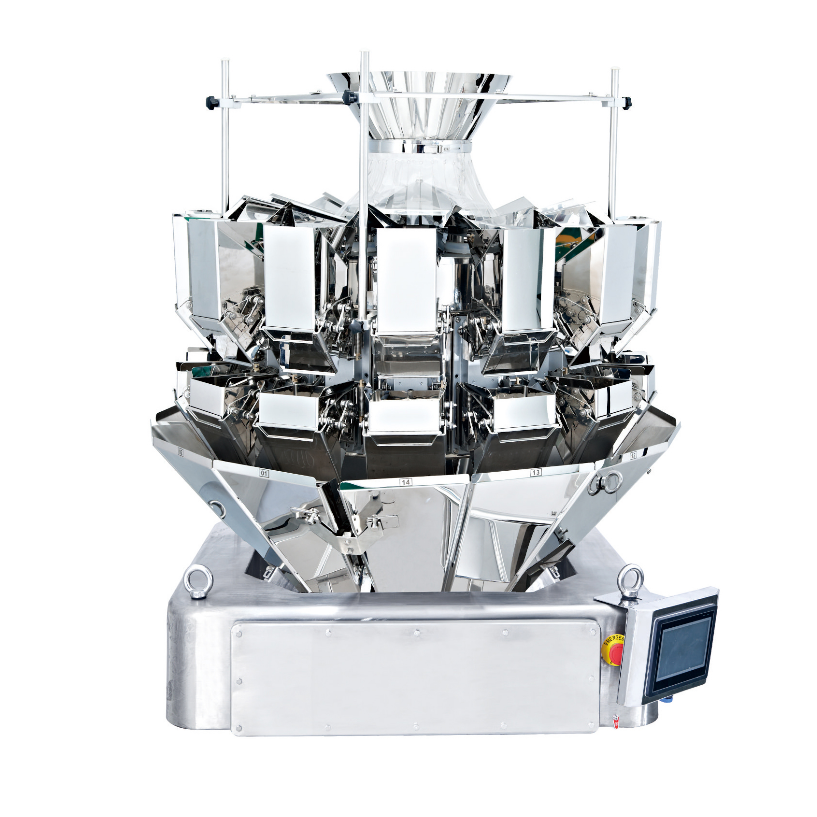
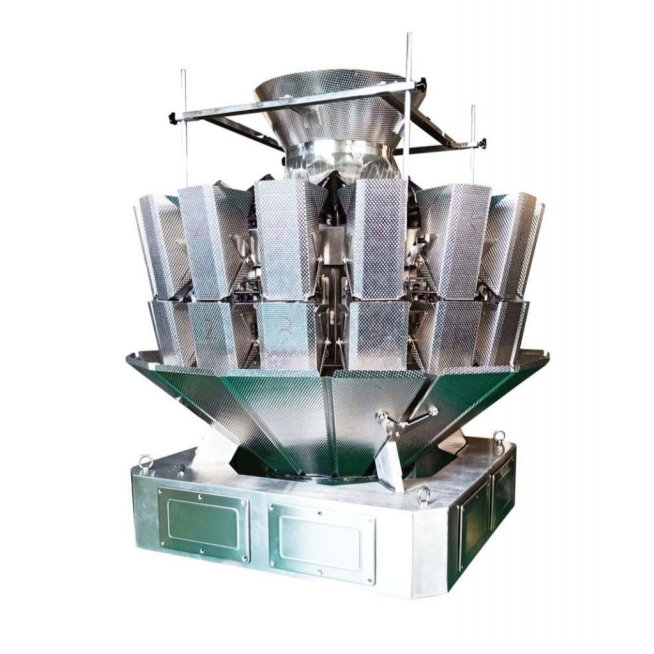
When line cycle time is higher or target weight is greater, the combinatorial advantage of the 14 head becomes more pronounced.ZHD-A14 14 Head Combination WeigherThe weight range is also 10-5000g, with the maximum weighing speed increased to 100P/M. Accuracy is calibrated at x(0.5). It features the same 304 stainless steel body, a 1.6L/2.5L hopper, and a 7-inch touchscreen.
Prioritize 14 head in the following scenarios: when individual package target weight is high or material unit weight fluctuates significantly; when multiple accessories are mixed and packed by ratio (e.g., complete hardware sets); when downstream packaging line speed is high, requiring buffer time for weighing; or when strict consistency of individual package weight is required. If specifications and output volume increase further, additional evaluation may be warranted.ZHD-A16 16 Head Combination WeigherWait for a higher configuration.
How is accuracy determined? ±0.5g is the nominal value; actual performance depends on three variables.
The accuracy on the device nameplate (e.g., x(0.5), ±0.5g level) is calibrated under standard material and operating conditions. Actual running accuracy is affected by three variables.
First, material characteristics. Irregular shapes, surface static charge, and weight variations in hardware components reduce stability during feeding and weighing. This is why we must evaluate whether the hopper structure and vibration parameters are compatible with the specific material—and explains why the same nominal precision can yield different results across different materials.
Second, stability of the weighing and feeding system. The uniformity of the sensor and vibration feeder systems, and whether amplitude can be independently adjusted per line, determine repeatability during long-term continuous operation—where repeatability impacts actual output more than single-shot accuracy.
Third, calibration and operating environment. Factors such as support for multi-stage weight calibration, ability to restore factory settings, workshop vibration, and airflow conditions all affect the actual deviation distribution. During acceptance testing, use "actual single-bag deviation distribution at target weight" as the standard. In the selection phase, require on-site trials with real materials rather than relying solely on nameplate specifications.
Changeover Efficiency: The Key Metric for Equipment Utilization
In the hardware industry, frequent product specification changes mean that changeover time directly determines equipment utilization. To evaluate a multi-head weigher's changeover capability, consider three factors: parameter storage capacity, recipe retrieval method, and ease of cleaning and changeover.
Using the Zhonghengda combination weigher as an example, the device stores over 100 parameter sets. Switching specifications triggers the corresponding recipe to automatically sync weighing parameters, target weights, and dispensing logic. Its modular design and detachable hoppers simplify residue cleanup. Integrated smart fault detection and alerts minimize unplanned downtime. For workshops producing mixed specifications, these efficiencies often save more time than raw machine speed alone.
4-Step Selection Method
Step 1: Define the target weight and allowable tolerance. First, establish the target weight range per bag and the customer's acceptable deviation limits; this is essential for determining the required combination space.
Step 2: Verify line cycle time. Compare the actual weighing requirement (packs per minute) with the throughput rates of the packaging machine and conveyor to prevent weighing from becoming a bottleneck or causing capacity waste.
Step 3: Assess material characteristics and changeover frequency. Record the shape, weight variation, static electricity, and stickiness of the material, as well as the number of specification changes per day or week. Use this data to determine whether the hopper and vibration parameters require customization.
Step 4: On-site trial and verification of supporting equipment. Run the machine with actual materials to collect deviation data, confirm air supply, power requirements, footprint, and downstream interface conditions, then finalize the head count and specific configuration.
When to upgrade from a standalone machine
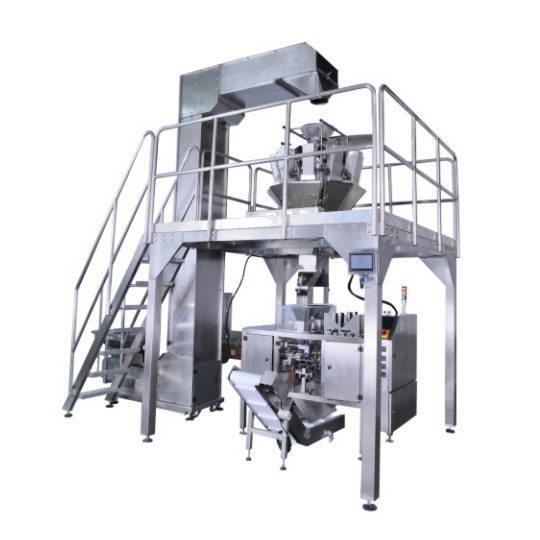
When the selection conclusion points to higher throughput and stricter consistency requirements, the weighing stage should be planned alongside upstream and downstream equipment. The value of an integrated line solution lies in three key areas: real-time synchronization of weighing data with packaging machines, sealing machines, and conveyor lines for full-line visibility; coordinated operation across all devices at a unified cycle time to minimize wait times and material buildup; and simultaneous adjustment of weighing parameters, packaging specifications, and conveyor paths during product changeovers.
Zhonghengda's integrated line solution starts with combination weighers and extends upward to material conveying and feeding systems, while covering downward packaging, sealing, palletizing, and logistics conveyance—forming a complete closed loop from weighing to finished product (such asZHD-T03 Fully Automatic Combination Weighing and Packaging LineAs the original manufacturer of automated weighing and packaging equipment, Zhonghengda has provided automation solutions to over 500 enterprises across industries including home appliances, hardware components, food and grain, condiments, and daily chemicals.
Still unsure between the 10 and 14? The best way to decide is to run a live trial with your actual material at the target weight. Zhonghengda offers free selection guidance and production line planning.
Hotline: 15507632375
Email: zhonghda@163.com
Address: Building 16, No. 8, Beigongye Avenue, Jidongyi Community, Xiaolan Town, Zhongshan City
keywords
Reviews (0)
Post a comment
FAQ
FAQ
Yes, we offer professional on-site installation and commissioning services, along with free operator training to ensure the equipment runs smoothly.
Can't find a solution to your question?
Welcome to leave your questions. Our professional engineers will provide you with one-on-one support.